
1. Product Overview
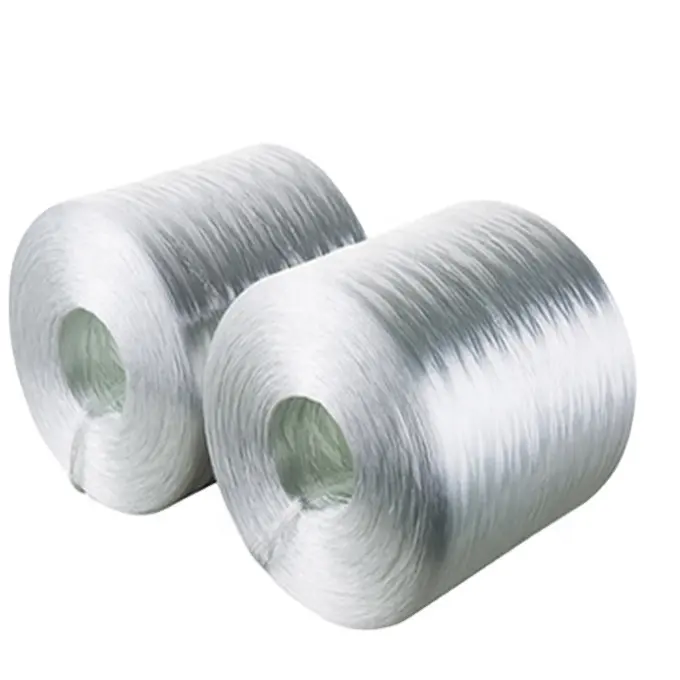
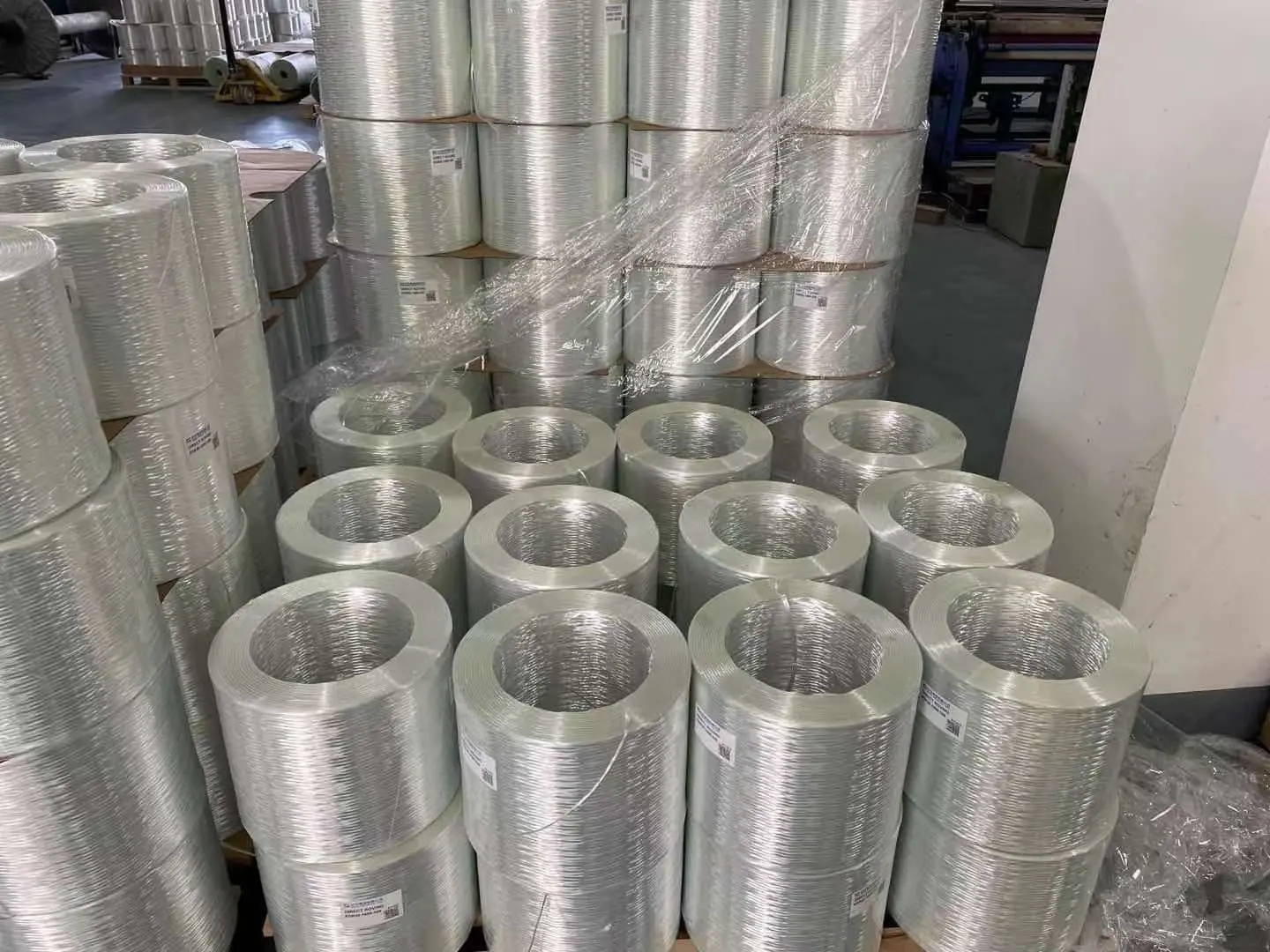
SPRAY UP ROVING (also known as Gun Roving) is a high-performance glass fiber reinforcement material specifically engineered for spray molding processes in the Fiberglass Reinforced Plastic (FRP) industry. Composed of continuous E-glass or ECR-glass filaments bonded with a special silane-based sizing, it exhibits excellent compatibility with unsaturated polyester resin, vinyl ester resin, and polyurethane resin. This roving is designed to be chopped into uniform lengths (typically 25-50mm) during application, mixed with resin, and sprayed onto molds to form strong, durable FRP components.
2. Structure & Key Characteristics
Core Structure
- Composition: Multi-strand untwisted glass fiber filaments, with each strand consisting of 200+ individual filaments.
- Sizing System: Silane-based coating that enhances resin wetting, adhesion, and mechanical performance of the final FRP product.
- Form Factor: Continuous roving wound on conical or cylindrical bobbins for seamless feeding into spray equipment.
Critical Performance Traits
|
Performance Category
|
Key Features
|
Technical Advantages
|
|
Processing Efficiency
|
Excellent chopability, low static, uniform dispersion
|
Minimizes fuzz and breakage; ensures consistent spray coverage
|
|
Resin Compatibility
|
Rapid wetting speed, strong penetration
|
Reduces air bubbles; optimizes fiber-resin bonding
|
|
Mechanical Strength
|
High tensile strength, stiffness, and impact resistance
|
Enhances FRP product durability and load-bearing capacity
|
|
Mold Adaptability
|
Suitable for complex shapes and large-area lamination
|
Prevents sagging on vertical surfaces; enables flexible design
|
|
Industrial Compatibility
|
Works with filled resin systems and automated equipment
|
Supports mass production via robotic spray lines
|
3. Core Advantages
- High Production Efficiency: Enables continuous, high-speed spray molding, reducing labor costs and cycle time compared to hand lay-up.
- Cost-Effectiveness: Low material waste (≤5%) and streamlined processing deliver superior cost-performance ratios.
- Design Versatility: Ideal for manufacturing large, irregularly shaped components that are difficult to produce with traditional materials.
- Enhanced FRP Performance: Improves dimensional stability, corrosion resistance, and structural integrity of final products.
- Automation Readiness: Compatible with high-speed spray machines and robotic systems, meeting industrial-scale production demands.
4. Typical Application Scenarios
SPRAY UP ROVING is widely adopted across industries requiring large, robust FRP parts:
- Marine Industry: Yacht hulls, fishing boat decks, kayaks, jet ski components, and boat interiors.
- Sanitary Ware: Bathtubs, shower enclosures, washbasins, integrated bathrooms, and water storage tanks.
- Transportation: Truck bodies, automotive bumpers, body panels, motorcycle fairings, and RV components.
- Construction & Infrastructure: Cooling towers, chemical storage tanks, pipelines, anti-corrosion liners, corrugated sheets, and cold storage liners.
- Other Fields: Centrifugally cast pipes, wind turbine blade segments, sports equipment, and industrial containers.
5. Standard Specifications & Technical Parameters
|
Parameter
|
Details
|
|
Linear Density (Tex)
|
2400Tex, 4000Tex (most commonly used)
|
|
Sizing Type
|
Silane-based (general-purpose: e.g., 180 series; application-specific)
|
|
Compatible Resins
|
Unsaturated polyester resin, vinyl ester resin, polyurethane resin
|
|
Chopped Length
|
25-50mm (customizable per product requirements)
|
|
Packaging
|
Bobbin-wound (conical/cylindrical) for continuous spray equipment feeding
|
|
Quality Standards
|
Compliant with ISO, CE, and industry-specific certifications
|
6. Brief Spray Molding Process
- Mold Preparation: Clean the mold, apply release agent, and cure the gel coat layer.
- Material Setup: Load SPRAY UP ROVING onto choppers and prepare resin systems.
- Spray Application: Use specialized guns to spray chopped fibers and resin uniformly onto the mold surface.
- Rolling & Debubbling: Use rollers to ensure full resin impregnation and eliminate air bubbles.
- Curing: Allow the composite to cure at room temperature or via heat treatment.
- Demolding & Finishing: Remove the product, trim edges, and perform surface treatment.
7. Selection & Usage Guidelines
- Choose by Application: 2400Tex/4000Tex for large components (hulls, tanks); medium-wetting-speed grades for sanitary ware.
- Resin Matching: Confirm sizing compatibility with selected resin systems.
- Quality Assurance: Opt for products meeting international standards for consistent performance.
- Storage Conditions: Store in a cool, dry environment (avoid direct sunlight/moisture); shelf life: 12 months.
As a cornerstone material in the FRP industry, SPRAY UP ROVING combines efficient processing with exceptional reinforcement capabilities, making it the preferred choice for manufacturing large, complex composite parts. Its versatility drives innovation across marine, sanitary, transportation, and construction sectors, empowering the development of high-performance FRP solutions worldwide.
