
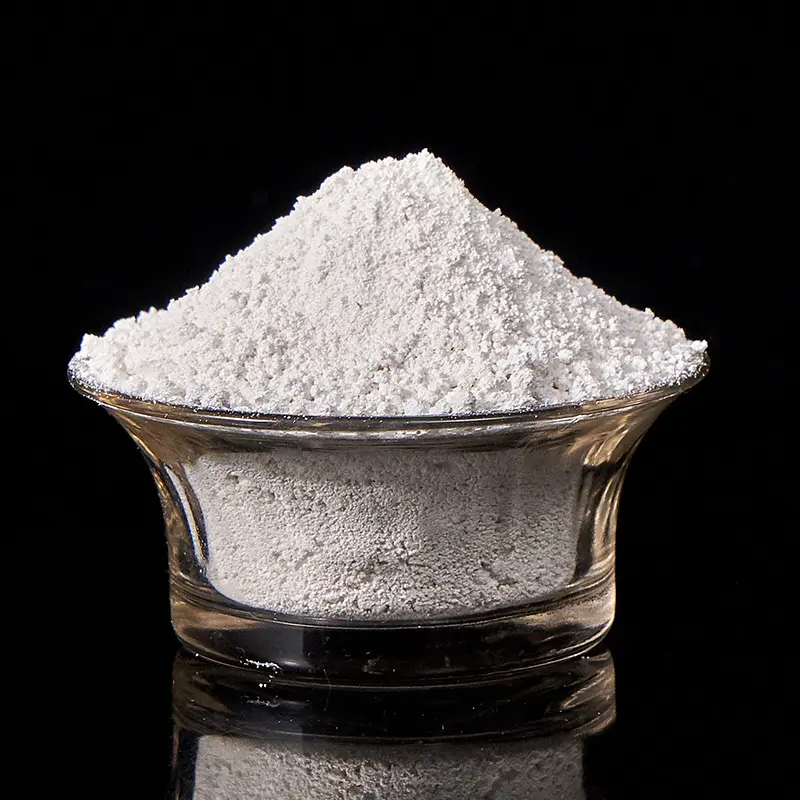
The global titanium dioxide (TiO₂) industry is experiencing unprecedented growth and transformation, fueled by surging demand from end-use sectors, breakthrough technological advancements, and evolving regulatory landscapes. With a market valuation of USD 22.08 billion in 2024 and a projected CAGR of 6.4% through 2033, TiO₂ is solidifying its position as a critical material across industries worldwide .
Market Growth & Regional Dynamics
Asia-Pacific dominates the global TiO₂ market, accounting for 53.95% of 2024’s total value (USD 11.91 billion), driven by robust construction activities and industrial expansion in emerging economies . The paints and coatings segment remains the largest application, contributing 52% of market share (USD 11.48 billion), as architectural and automotive sectors prioritize high-opacity, durable formulations . Notably, North America is emerging as the fastest-growing region, while Europe’s market is adapting to regulatory shifts and energy transition challenges .
Tariff developments are reshaping global supply chains: EU antidumping duties (14.4%–39.7%) on Chinese TiO₂ imports have reduced shipments by nearly 20% since July 2024, creating opportunities for multinational producers (MNPs) . Brazil and India have implemented similar measures, further redirecting trade flows. Meanwhile, China’s domestic market is witnessing a price surge of USD 75–120 per ton, led by 20+ major producers, amid rising raw material costs and strong demand .
Technological Innovations Redefine Applications
TiO₂’s functional versatility is expanding beyond traditional pigment uses, with cutting-edge innovations driving adoption in high-growth sectors:
- Construction & Infrastructure: Nano-engineered TiO₂ is revolutionizing building materials, enhancing concrete strength by 30% while enabling photocatalytic pollution degradation . 3D-printed cementitious systems modified with TiO₂ offer improved durability and carbon footprint reduction for modular construction .
- Environmental Remediation: Advanced photocatalytic TiO₂ formulations now achieve 92.2 μM/min hydroxyl radical synthesis rates, enabling near-complete VOC degradation in indoor air purification . Metal-doping and semiconductor coupling technologies are addressing charge carrier recombination limitations .
- Renewable Energy: Controllable-spacing TiO₂ nanorod arrays have boosted solar cell efficiency by over 10%, reaching power conversion rates of 10.44% in CuInS₂ devices . This breakthrough unlocks new potential for photovoltaic applications.
- Personal Care: Ultra-fine TiO₂ grades, such as Tayca’s 2025 sunscreen formulation, deliver enhanced UV protection with improved transparency and skin compatibility, catering to Asian beauty markets . Thailand’s updated regulations now mandate clear labeling for nano-TiO₂ in cosmetics, setting a regional compliance benchmark .
Sustainability & Regulatory Compliance
The industry is prioritizing eco-friendly production and circularity. Chemours’ pilot chloride-process TiO₂ reduces energy consumption by 25% and carbon emissions, aligning with global net-zero goals . Tronox, a UN Global Compact signatory, has integrated SASB and GRI standards into its sustainability reporting, focusing on GHG reduction and responsible sourcing .
Under EU REACH regulation, TiO₂ remains unrestricted, with the Titanium Dioxide Industry Consortium (TDIC) leading comprehensive safety assessments and data sharing . The ongoing CORAP evaluation by France’s ANSES agency is expected to reinforce TiO₂’s safe-use profile .
Industry Restructuring & Future Outlook
The market is witnessing significant consolidation: Venator’s 2025 production suspension (removing 300,000 tons of annual supply) and potential sale reflects European producers’ struggles with energy costs (up 217% since 2020) . This shift is accelerating capacity migration to Asia, where 氯化法 (chloride process) adoption is rising—now accounting for 58% of global production .
Looking ahead, TiO₂ demand is set to reach USD 38.58 billion by 2033 , with key growth drivers including:
- Expanded use in cool roof coatings for energy-efficient buildings
- Rising adoption in lightweight automotive plastics
- Advancements in photocatalytic water purification
- Emerging applications in medical devices and smart materials
As the industry evolves, stakeholders are urged to prioritize technological upgrading, regulatory compliance, and sustainable supply chain practices to capitalize on the growing global demand.
